UX/UI Design | Case Study
Designing a game-driven science learning experience for children
The Problem
Inspired by our previous work with Kiwrious, we noticed that many children don't engage in science activities at home. Since existing research shows that using sensors can spark childrens' curiosity and encourage exploration, we looked at how we could use their smart devices to make learning science more fun and hands-on.
How might we spark children's interest in science by using sensors to explore the world around them?
The Result
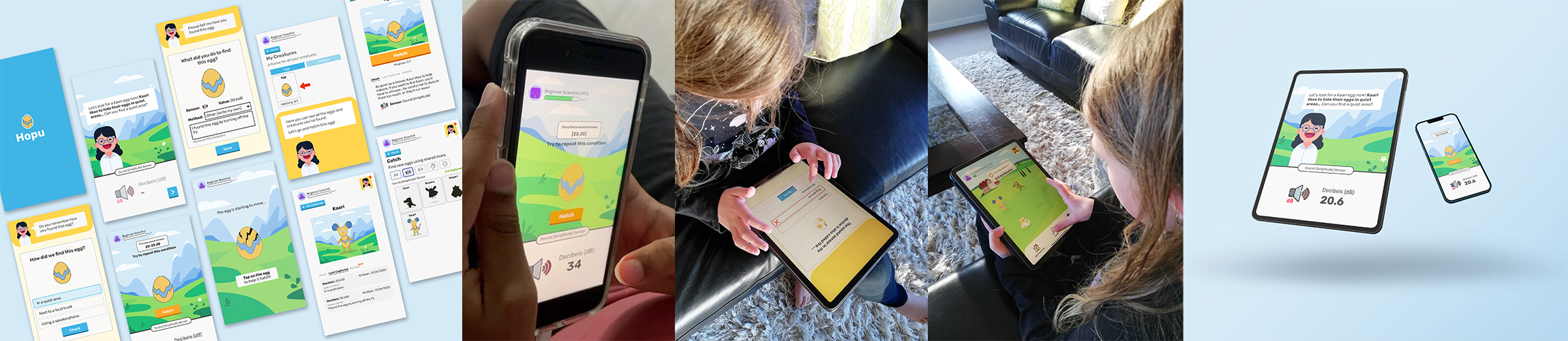
We developed a game called 'Hopu', for children between 8-12 years. The game was built around an educational framework called 'Nature of Science'. By using their device sensors, children can discover and hatch new imaginary creatures while exploring basic science concepts.
This app is available on the App Store and Play Store.
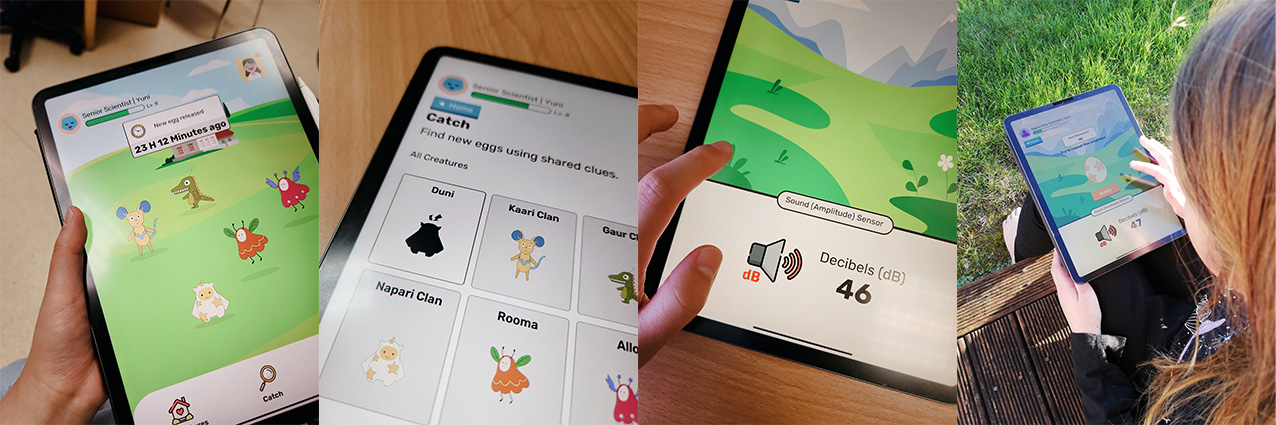
Designing Hopu was a nonlinear, iterative process... below I describe some key moments...
Exploratory Interviews
We sought to understand how children spend their time after school and in the weekends, as well as their parents’ involvement in occupying this time. We interviewed 10 parents and 16 children (between 8-14 years).
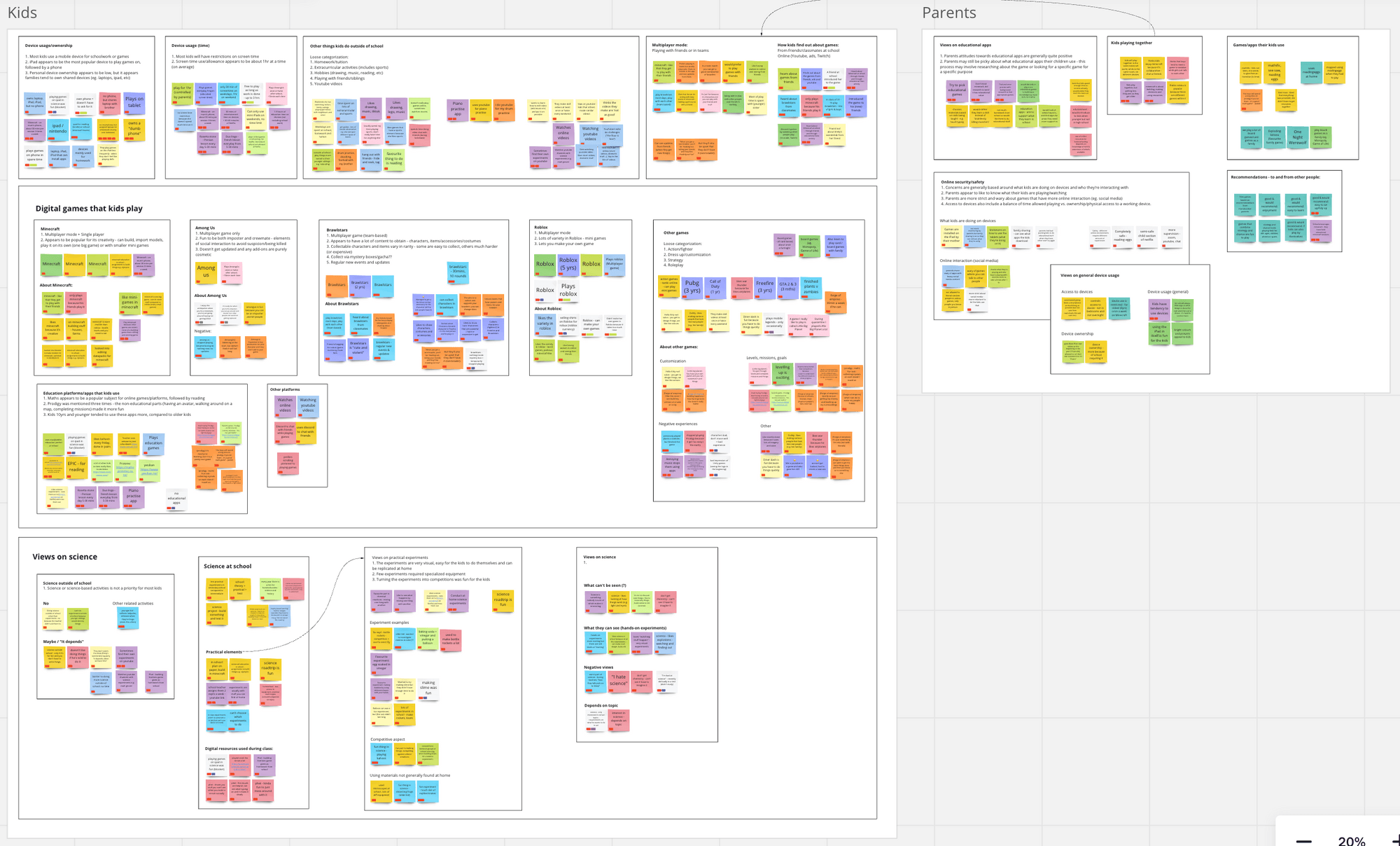
Our interview insights led us towards a game-based approach:
- 1
Enable self-guided exploration: children rarely engaged in science-related activities outside of school because of the parental supervision or materials required. However, many own or have access to sensor-equipped mobile devices that could be used to learn.
- 2
Build engagement through play: many kinds of games are popular among children. Gamifying science learning at school (e.g. competitive experiments) appear to increase childrens' engagement in learning. Aligning these with a science framework (Nature of Science1) can also deepen educational impact outside of the classroom.
- 3
The importance of parental support: clear communication of educational value and safety to parents is essential to encourage use at home.
- 1 Norman G Lederman, Judith S Lederman, and Allison Antink. 2013. Nature of science and scientific inquiry as contexts for the learning of science and achievement of scientific literacy. International Journal of Education in Mathematics, Science and Technology 1, 3 (2013).
Prototyping (1) and Early User Testing (1)
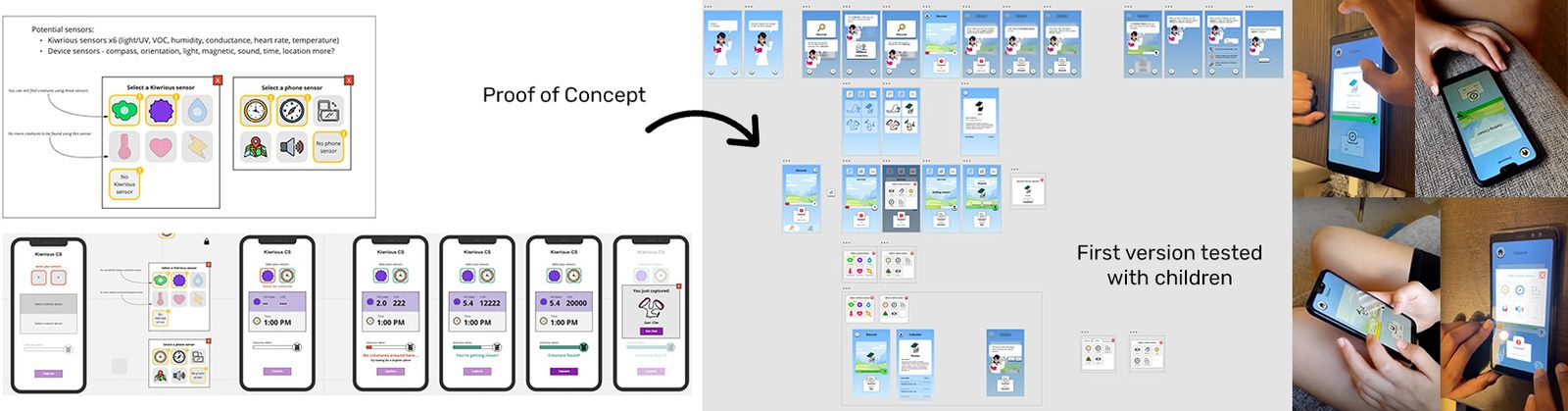
We built a quick proof of concept to test sensor functionalities. From there, we expanded the prototype with a basic tutorial. We performed early user testing with five children (7-12 years).
Prototyping (2)
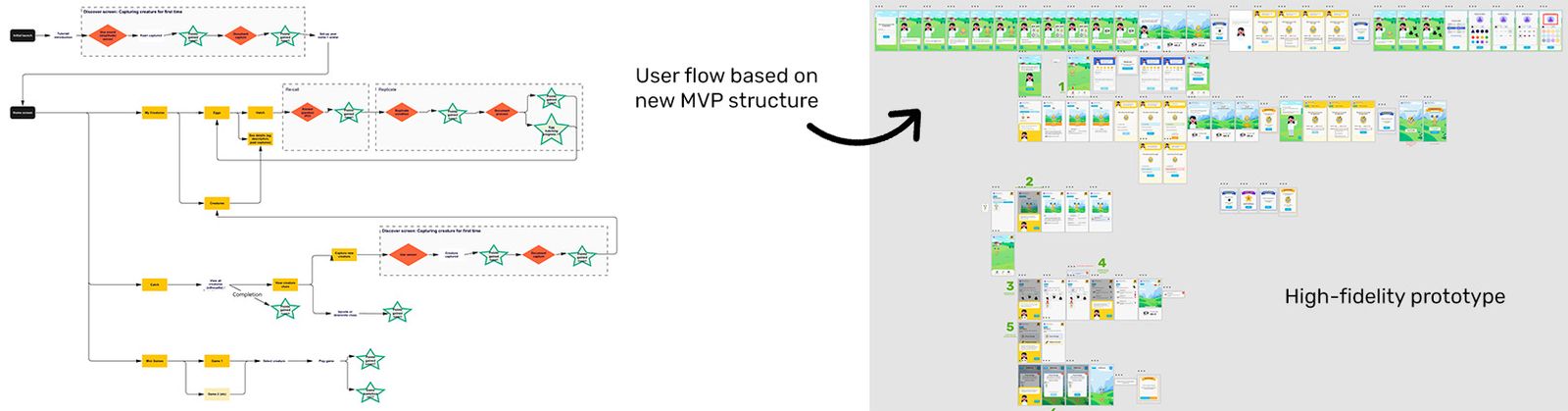
With feedback from the children and an external expert, we re-defined our MVP and updated core features to make it feel more like a game - for example, including a story narrative, characters, and updating visual assets. We completed further observations with four children (9-12 years) during this process.
User Testing (2) — Evaluation & Peer-Reviewed Publication
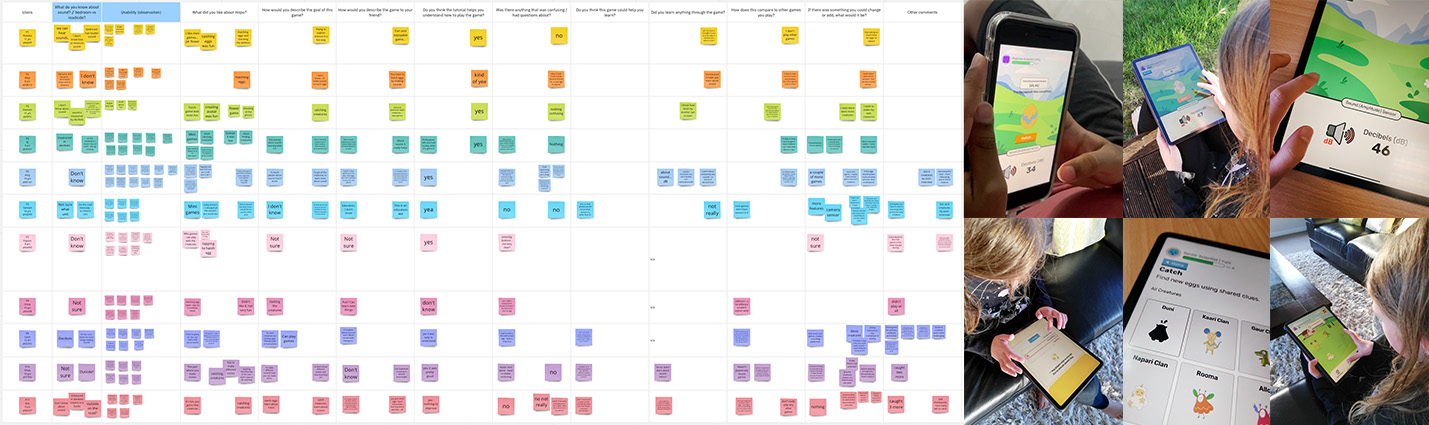
We recruited another 11 children (8-12 years) for a user study and evaluation. This study was conducted under ethical approval from the National University of Singapore and took place over 5 days. We interviewed each child, observed them completing the tutorial, then gave them access to play at home in their own time. We concluded by conducting a follow-up interview. Throughout the study, we employed an intrinsic motivation inventory (IMI) survey twice to quantitatively evaluate any changes in intrinsic motivation and attitudes towards science pre- and post-study.
Findings:
The majority of children had positive reviews of the game. The IMI surveys showed a high level of motivation which was statistically significant and this was maintained over the study period for the eight children who completed both IMI surveys. We used a subscale of this survey to quantify their attitudes towards science, which showed that children did perceive science to be constructive and beneficial to learn, with a slight increase over the study period. However, this was not a statistically significant increase.
Interview Quotes:
10 yr old
"fun to make different noises”
9 yr old
“catching creatures is fun”
9 yr old
“it’s to learn about different noises and how loud they are”
12 yr old
“the art and features are for younger kids”
9 yr old
“I didn’t know about decibels before this”
Publication
We published a peer-reviewed research paper on this project to the ACM Interaction Design and Children (IDC) Conference in 2023. For more detailed insights, the paper can be viewed and downloaded via the link below.
Hannah Qiao, Hussel Suriyaarachchi, Sankha Cooray, and Suranga Nanayakkara. 2023. Snatch and Hatch: Improving Receptivity Towards a Nature of Science with a Playful Mobile Application. In Proceedings of the 22nd Annual ACM Interaction Design and Children Conference (IDC '23). Association for Computing Machinery, New York, NY, USA, 278–288. https://doi.org/10.1145/3585088.3589384
Next Steps
Currently, only the sound sensor (measuring decibels) is available on Hopu. We plan to build features that will incorporate the ability to measure sound frequency, light, magnetic field, or the positioning and orientation of the mobile device - all of which are possible through recent smart devices. There has also been a consistent demand for more content and creatures to discover. In its current stage, Hopu is available to download on Google Play and the App Store.
Relevant links: hopuhopu.com, ahlab.org/project/hopu